


Judge with Bad Reputation Cannot Remain in Judicial Office, Supreme Court Rules
 Web Desk
|
5 hours ago
Web Desk
|
5 hours ago
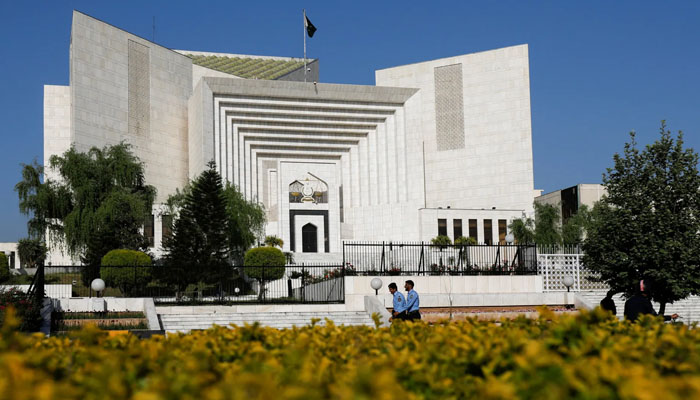
The Supreme Court has ruled that judge dismissal is the appropriate punishment when a judge’s bad reputation is established, stating that a judicial officer who has lost public trust cannot continue to hold office. The remarks were made in a verdict related to an Additional Sessions Judge posted in Mailsi.
The nine-page judgment was authored by Justice Shahid Waheed, while Justice Naeem Akhtar and Justice Shafi Siddiqui were also members of the three-judge bench that heard the case.
The Supreme Court set aside the decision of the Service Tribunal and restored the dismissal order previously issued by the High Court. The court observed that the original punishment was lawful and should remain in effect.
Also Read: PSX drops over 2,800 points as market sentiment weakens
The court also rejected both petitions seeking the reinstatement of the judicial officer and the removal of adverse remarks from his record. According to the ruling, even though bribery allegations were not proven, a judge with a damaged reputation cannot continue serving in the judiciary. The court further stated that compulsory retirement is not an appropriate penalty in such cases and that dismissal is the proper course of action. It added that the tribunal had misinterpreted the law by converting the dismissal into compulsory retirement.
The judgment emphasized that a judge cannot remain in office once public confidence in the judiciary is undermined. The court remarked that judicial integrity cannot be divided—it is either complete or absent. It further noted that removing a judge with a bad reputation is comparable to removing a harmful disease from the body, making judge dismissal necessary to protect the credibility and integrity of the judicial system.







8 minutes ago
54 minutes ago
1 hour ago
2 hours ago
3 hours ago
4 hours ago
- Italian Prime Minister Giorgia Meloni has strongly criticized US President Donald Trump after comments he made about her following the…
- US intelligence agencies have reportedly warned the Trump administration that Israel could take actions that may complicate efforts to secure…
- The United States presidential aircraft, commonly known as Air Force One, has been officially retired after 35 years of service.…
- Washington: US President Donald Trump has once again praised Pakistan’s political and military leadership, calling both the Prime Minister of…
 Karachi is witnessing a worrying surge in congenital heart diseases among newborns, with medical experts warning that thousands of children…
 Pakistan now has the highest diabetes rate in the world, according to the latest IDF report. The report shows that…
 South Africa, Eswatini, and Zambia have begun administering lenacapavir, a groundbreaking HIV-prevention injection, marking a major milestone in the fight…
 KARACHI: The Sindh High Court’s Constitutional Bench was informed on Monday that all milk samples collected in Karachi are harmful…






- Italian Prime Minister Giorgia Meloni has strongly criticized US President…8 minutes ago
- US intelligence agencies have reportedly warned the Trump administration that…54 minutes ago
- The United States presidential aircraft, commonly known as Air Force…1 hour ago
- Washington: US President Donald Trump has once again praised Pakistan’s…2 hours ago